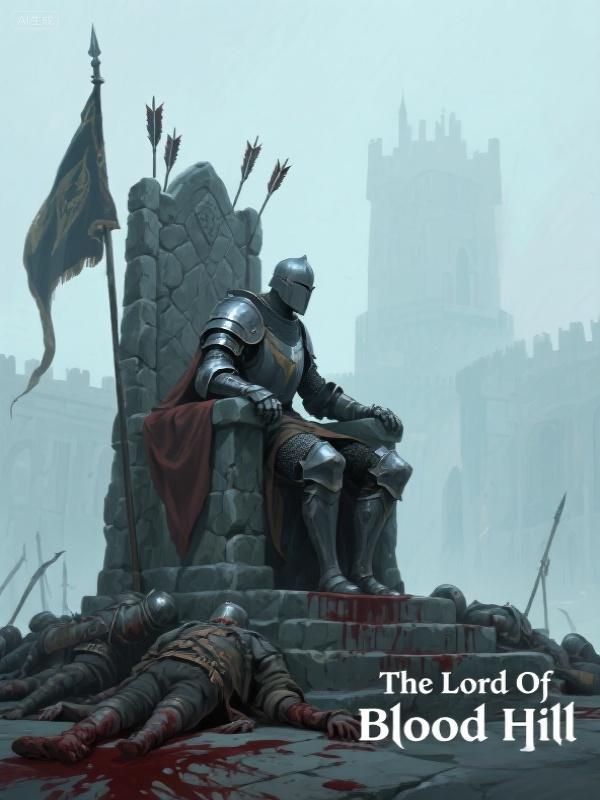
A soul from Earth unexpectedly finds itself in a world woven with swords and magic. This gay, now named Henwell, seems to be constantly challenged by fate, as if the goddess of destiny herself disfavored him. Throughout his legendary journey, he gradually discovers that gods truly exist in this world...... However, for him, this is merely the beginning. And his goal shifts from becoming a noble to unraveling the truth of the world. This slow-burning story will lead readers into a detailed and realistic fantasy world.
The Lord Of Blood Hill is a sprawling weak-to-strong isekai fantasy that blends sword-and-magic adventure, Western cultivation, divine mystery, political ambition, and morally grey character growth into the kind of long-form epic that rewards readers who enjoy watching a vulnerable protagonist harden into someone history cannot ignore.
Who This Book Is For
This book is for readers who love large-scale fantasy journeys where the main character does not begin as a chosen savior, but as someone thrown into an unforgiving world and forced to survive through patience, intelligence, restraint, and gradual growth. If you enjoy isekai stories with medieval kingdoms, nobles, armies, conspiracies, adventurers, gods, swordplay, magic systems, and a protagonist who climbs from weakness toward influence, The Lord Of Blood Hill offers exactly that long-haul progression fantasy appeal.
It is also a strong fit for fans who prefer their fantasy protagonists to be calm, cautious, and morally flexible rather than purely heroic. Henwell’s journey is not just about getting stronger; it is about understanding power, hierarchy, fate, belief, and the hidden architecture of the world around him. Readers who enjoy political tension, character development, survival under pressure, and slow accumulation of status will find plenty to sink into here.
Who This Book Is Not For
This may not be the best pick for readers who want a compact, polished, traditionally paced fantasy novel with a tight beginning, middle, and end. The Lord Of Blood Hill is built like a serialized epic: broad in scope, gradual in development, and designed for readers who enjoy living inside a fantasy world across many chapters. If you dislike long progression arcs, isekai setups, cultivation-style growth, or protagonists who take time to become powerful, the pacing may feel too expansive.
It may also not suit readers who only want morally pure heroes. The book openly leans toward a morally grey male lead, which means the emotional satisfaction comes less from watching a saint do the right thing and more from watching a survivor make difficult choices in a world that rarely rewards innocence.
3 Reasons to Recommend It
A classic isekai premise with stronger-than-usual epic ambition
At first glance, the setup feels familiar: a soul from Earth wakes in another world shaped by swords, magic, fate, and danger. But The Lord Of Blood Hill quickly signals that it wants to be more than a simple power fantasy. Henwell’s goal evolves from personal advancement into a deeper search for the truth behind the world itself, and that shift gives the story a broader mythic backbone.
The novel’s appeal lies in that movement from survival to revelation. The protagonist is not merely trying to win battles or gain titles; he is gradually being pulled toward questions of destiny, divine power, and the hidden rules governing existence. That gives the story the satisfying structure of a personal rise wrapped inside a much larger cosmic mystery.
Henwell’s weak-to-strong growth feels grounded in pressure, not convenience
One of the strongest pleasures of this kind of fantasy is watching a protagonist earn his transformation. Henwell is not presented as instantly dominant. He is challenged repeatedly by fate, environment, hierarchy, and circumstance. That repeated pressure makes his growth more engaging because each step forward feels like a response to hardship rather than a gift handed down by the plot.
His calm and cautious personality also helps separate him from more impulsive isekai leads. He is not simply charging into danger for spectacle. He observes, adapts, calculates, and learns. That makes him a satisfying protagonist for readers who enjoy strategic growth as much as combat growth. His rise feels less like a straight line and more like a campaign: measured, dangerous, and shaped by every setback.
The world has the ingredients of a true long-form fantasy saga
The Lord Of Blood Hill works because its setting is built to expand. It has kingdoms, nobles, armies, adventurers, gladiators, conspiracies, gods, medieval power structures, and sword-and-magic conflicts. These elements give the novel room to grow beyond one character’s immediate problems. The world feels like a place with institutions, histories, ambitions, and buried truths.
That matters because long fantasy needs more than a strong protagonist. It needs a world that can keep producing meaningful conflict. Here, the combination of political hierarchy, divine presence, cultivation-like progression, and martial danger creates a sturdy foundation for serialized storytelling. The more Henwell grows, the more the world opens around him, and that widening sense of scale is one of the book’s strongest hooks.
One Drawback
The main drawback is that the novel’s long-form serialized structure may not appeal to readers who want immediate payoff. The story is built around gradual development, expanding stakes, and accumulated progression, which means some readers may find the pacing slower than a tightly edited Western fantasy novel. Its greatest strength is also its biggest barrier: this is a book for readers willing to commit to the journey, not for those looking for a quick, self-contained adventure.
Editor’s Review
The Lord Of Blood Hill is the kind of fantasy web novel that understands the quiet pleasure of escalation. It begins with a displaced soul and a hostile world, but its real promise lies in what happens after the shock of arrival fades. Henwell is not merely dropped into a sword-and-magic setting so he can collect powers and win admiration. He is placed inside a world that seems determined to test him from every angle: socially, physically, morally, and spiritually.
That is where the novel finds its identity. It is not just an isekai adventure; it is a study of adaptation. Henwell’s transformation from an outsider into someone capable of navigating nobles, danger, conflict, and divine mystery gives the story its long-term pull. He is not an invincible wish-fulfillment hero, and that makes him more interesting. His appeal comes from composure under pressure, from the ability to endure humiliation and threat without losing direction, and from the slow formation of a worldview shaped by pain and ambition.
The Western cultivation element gives the book a distinctive flavor. Instead of leaning entirely on familiar Eastern cultivation tropes, the story merges progression fantasy with a medieval, sword-and-magic atmosphere. That combination allows the novel to feel accessible to Western fantasy readers while still offering the addictive upward momentum that cultivation fans crave. Growth is not just physical. It is social, strategic, and existential.
The novel is also effective because it keeps widening its horizon. Henwell’s early ambition may be personal, but the story gradually pulls him toward something more dangerous: the truth of the world. The presence of gods gives the narrative a mythic pressure. In a weaker book, divine beings would simply be background decoration. Here, they suggest that power is layered, history is manipulated, and fate itself may be an antagonist.
What makes The Lord Of Blood Hill especially bingeable is its sense of accumulated weight. Each hardship matters because it contributes to the making of Henwell. Each faction, title, enemy, and revelation becomes part of a larger climb. The book is not in a hurry to turn him into a legend, and that patience is part of its appeal. It lets readers watch the legend being forged.
For readers who enjoy morally grey protagonists, this is also a welcome change from cleaner heroic fantasy. Henwell’s path is not framed as a simple march toward righteousness. He is learning how power works in a world where morality is often a luxury of the protected. That tension gives the story a sharper edge. The reader may root for him, but the book does not require him to remain innocent in order to be compelling.
The Lord Of Blood Hill is not a minimalist fantasy. It is expansive, ambitious, and clearly designed for readers who want to settle into a growing saga. Its pleasures are cumulative: the slow rise, the widening world, the strategic protagonist, the divine mystery, and the promise that every struggle is pushing Henwell closer to something far larger than survival. For fans of isekai progression fantasy with medieval atmosphere and a morally complex hero, this is a highly readable epic in the making.




 千斤顶
千斤顶









 English
 简体中文
简体中文 繁體中文
繁體中文 한국 사람
한국 사람 日本語
日本語 Deutsch
 русский
 بالعربية
 TÜRKÇE
 português
 คนไทย
คนไทย french