Recommend books Realized Game: I Hoarded 10 Billion Defense Towers Review: An Addictive Apocalypse Power Fantasy Undermined by Repetition and Nationalist Caricature
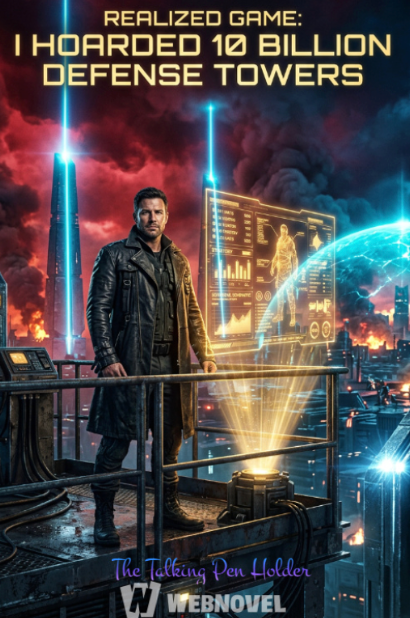
Games of all genres have invaded Blue Star, and the apocalypse has arrived. Secret Realms, Exotic Beasts, Zombies, Demons, NPCs, Potions... All the elements from games have appeared one by one on Blue Star. The good news is, the abilities from the games have also been inherited in reality: "Dou Dizhu" masters can control 54 playing cards; LoL players have gained Summoner skills; Gaming-addicted youths have raised Shaman totems; Some Three Kingdoms lord players have inherited a hundred thousand Tiger and Leopard Cavalry; And there are others who can now operate tanks, planes, and warships... In his past life, Shen Fei inherited the marksmanship from a battle royale game, and when a boss invaded the Base City, he was swallowed whole by a monster. Reborn one month before the game invasion, Shen Fei decisively started playing a niche tower defense game. Soon, the number one spot on all the leaderboards in the tower defense game all belonged to Shen Fei. When the apocalypse arrived, a giant city appeared, floating in the sky: Magic walls thousands of meters high, a high-tech Shield shimmering with blue light, and rows of Defense Towers piercing the clouds... Void Invasion? Return of the Zerg? Cultivation Army? Abyssal Devouring? All shall halt! This place is forbidden!
Realized Game: I Hoarded 10 Billion Defense Towers is an explosively imaginative apocalypse progression fantasy that turns pay-to-win gaming into literal survival infrastructure, delivering enormous spectacle and satisfying strategic dominance while repeatedly confusing bigger numbers with deeper storytelling.
Who This Book Is For
This novel is for readers who enjoy rebirth stories, game systems invading reality, overwhelmingly powerful protagonists, tower-defense mechanics, base building, leaderboard domination, apocalyptic preparation, and the specific pleasure of watching a hero exploit future knowledge before everyone else understands that the rules have changed.
It will particularly appeal to readers who prefer preparation fantasies over conventional training arcs. Shen Fei does not spend years meditating, mastering a sword, or gradually discovering his potential. Reborn before the game invasion, he recognizes that digital assets will soon become physical power and immediately begins converting money into survival.
The result is essentially a doomsday-prepper fantasy written in the language of mobile gaming. Every recharge, tower upgrade, inventory purchase, and leaderboard reward is another brick in a future fortress. The reader knows that everyone laughing at Shen Fei’s spending will eventually have to look up at his floating city and realize that the apparent fool was purchasing sovereignty.
Readers who love “numbers go up” progression will find plenty to enjoy. Shen Fei does not merely become strong. He monopolizes rankings, collects multiple tower types, acquires defensive and tracking functions, and gradually turns his build into an all-purpose military ecosystem. His towers are not just weapons; they are surveillance systems, territorial claims, rescue tools, status symbols, and eventually the architecture of an alternative civilization.
This is also a good fit for readers who enjoy crossover chaos. The premise allows card games, MOBAs, historical strategy games, shooters, cultivation systems, military simulators, and fantasy RPGs to manifest simultaneously. The world resembles a game store whose entire catalogue has exploded into reality.
Who This Book Is Not For
This is not for readers who need power to feel psychologically or morally earned.
Shen Fei’s principal advantages are prior knowledge, family wealth, and the ability to spend on a scale unavailable to ordinary players. He makes strategically correct decisions, but much of his early ascent consists of purchasing upgrades until his statistics become absurd. Readers who associate progression with discipline, sacrifice, ingenuity, or difficult choices may find his dominance curiously weightless.
It is also unsuitable for anyone who needs economic plausibility. The premise asks readers to accept enormous sums being poured into a microtransaction-heavy game because those purchases will later become real. Shen Fei knows this, but almost nobody else does. Within the fantasy, the strategy makes sense. Outside that closed loop, questions quickly appear: why not buy or commission a game, manipulate the software more directly, diversify across several systems, or use his wealth and future knowledge to construct a broader institutional response?
The novel usually answers such questions by accelerating toward the next upgrade rather than examining them.
Readers sensitive to nationalist triumphalism or xenophobic characterization should approach with greater caution. Several WebNovel reviewers specifically objected to the contrast between cooperative, heroic Chinese characters and aggressively caricatured foreign antagonists. The problem is not that a Chinese novel centers Chinese survival or national solidarity. The problem is that geopolitical conflict becomes dramatically thin when entire groups exist mainly to confirm the protagonist’s civilization as morally and strategically superior.
Finally, readers seeking balanced ensembles may struggle with a world designed primarily to witness Shen Fei’s superiority. Secondary characters often function as beneficiaries, enemies, spectators, or measurement devices. They tell us how impossible his power is, how shocking his towers are, and how badly everyone else miscalculated. That produces strong short-term satisfaction, but limited human complexity.
Three Reasons to Recommend It
1. The central premise turns microtransactions into one of the strangest and most effective forms of apocalypse preparation.
The novel’s best idea is not simply that games become reality. Many progression fantasies have used that premise. Its cleverer move is to treat digital spending as advance investment in physical sovereignty.
Before the invasion, Shen Fei’s behavior resembles the nightmare version of a mobile-game whale. He spends recklessly, dominates leaderboards, collects premium resources, and upgrades assets whose value exists only inside a server. To everyone around him, the money appears to be disappearing.
The reader knows the opposite is happening.
Shen Fei is moving capital from a world that is about to become obsolete into the infrastructure of the world that will replace it. A defense tower purchased as code becomes artillery. A shield becomes civic protection. An inventory becomes emergency logistics. A leaderboard reward becomes military superiority.
That reversal creates the novel’s strongest dramatic irony. The early chapters are built around a form of deferred vindication: people see waste, while Shen Fei sees the approaching exchange rate between fiction and reality.
There is also an unexpectedly sharp observation buried inside the fantasy. Modern games already train players to assign emotional and economic value to artificial scarcity. The novel merely removes the word “artificial.” Once game assets can protect cities and kill monsters, pay-to-win stops being an irritating commercial model and becomes a political order.
The richest player is no longer merely winning a game. He owns the walls.
This gives Shen Fei’s floating fortress a meaning beyond spectacle. It represents the moment private consumption becomes public power. His account turns into territory, and his collection becomes a state-like institution capable of deciding who receives protection.
The book does not fully interrogate that implication, but the implication remains fascinating. Shen Fei survives because he understands the future before everyone else and because he possesses enough capital to act on that understanding. Knowledge matters, but money determines how completely knowledge can be converted into power.
The apocalypse does not erase inequality. It upgrades it.
2. Tower defense gives the overpowered-protagonist formula a more interesting visual and strategic language.
Most overpowered heroes express strength through the body. They punch harder, move faster, cast larger spells, or unlock a divine bloodline. Shen Fei’s strength is architectural.
That distinction gives the novel much of its personality.
A tower-defense protagonist thinks in terms of range, coverage, placement, overlapping fields of fire, detection, reinforcement, and territorial control. Even when Shen Fei becomes overwhelmingly strong, his power fantasy is not entirely reducible to winning a duel. He creates zones in which enemies are unable to function.
His ideal victory is not defeating an opponent after a heroic struggle. It is constructing a system so comprehensive that the struggle never becomes competitive.
The floating city is therefore the perfect symbol for the novel. It is at once a fortress, weapon platform, sanctuary, throne, and declaration of independence. Traditional apocalypse fiction strips civilization down to small survivor groups. This book moves in the opposite direction. Shen Fei responds to collapse by building something larger, higher, and more technologically extravagant than the world that failed.
The variety of possible towers also gives the story a flexible engine. Offensive towers supply spectacle, shields create defense, tracking towers expand information control, enhancement systems deepen progression, and specialized structures allow Shen Fei to solve problems beyond combat.
The best sections understand that a tower is interesting because it changes the rules of space. A tracking tower makes distance less protective. A shield makes geography defensible. A high-level attack tower converts a city into a kill zone. The protagonist is not simply collecting abilities; he is redesigning the battlefield.
This is why readers praising the world-building have a point. The novel’s game invasion is deliberately excessive, but its excess creates possibilities. Card players, summoners, strategists, cultivators, pilots, monster tamers, and tower owners inherit fundamentally different relationships with reality. The apocalypse becomes a collision among gaming genres, each carrying its own logic.
At its best, the book feels less like a single game coming alive and more like incompatible rule systems fighting over which one gets to define the world.
3. The novel understands the addictive emotional rhythm of public disbelief followed by spectacular proof.
Realized Game is built around recognition scenes.
Shen Fei spends an impossible amount. People call him irrational. He takes the top position on the rankings. Other players investigate him. His combat power rises again. The game descends. His towers manifest. The people who doubted him are forced to confront a reality in which his supposedly absurd decisions were correct.
This structure is repetitive, but it is also extremely effective when properly paced.
The fantasy is not merely being powerful. It is being right before consensus catches up.
That distinction matters. Rebirth protagonists appeal to readers because they transform past helplessness into interpretive authority. Shen Fei died in his previous life because he had inherited the wrong kind of power for the threat he faced. His second chance gives him more than foreknowledge of events. It gives him the confidence to ignore the social judgment of people still living under obsolete assumptions.
Everyone else thinks in terms of the current economy. Shen Fei thinks in terms of the coming apocalypse.
Everyone else sees entertainment. He sees military procurement.
Everyone else sees a ridiculous leaderboard. He sees a map of future power.
The satisfaction comes when private knowledge becomes publicly undeniable. His floating city is the ultimate “I told you so,” rendered at metropolitan scale.
The novel’s forum reactions, shocked competitors, government responses, and horrified enemies all participate in this emotional economy. Secondary characters repeatedly provide an audience for the protagonist’s escalation. That audience helps translate abstract statistics into social impact. A combat-power number matters because knowledgeable people react as though the laws of the system have been broken.
This is pure web-fiction spectacle, but it is executed with enough momentum to remain compelling through significant stretches of the story.
One Reason You May Want to Skip It
The novel’s escalation eventually begins replacing development rather than producing it.
Its opening preparation arc is much longer than the premise requires. Shen Fei spends money, upgrades towers, tops leaderboards, shocks other players, acquires additional funds, and spends again. The scale increases, but the underlying action often remains unchanged.
This creates a problem of narrative interest. A strategic choice is engaging because alternatives exist and consequences remain uncertain. When the answer to most early problems is “spend more and upgrade everything,” strategy becomes shopping.
Several readers identified exactly this frustration. Some enjoyed the premise but felt that the apocalypse took too long to arrive. Others argued that Shen Fei’s power was not meaningfully earned because his wealth performed most of the difficult work. A later reader reported enjoying the novel until roughly chapter 126, after which an extended sequence appeared to abandon the structure that had sustained the story.
These complaints point toward the same underlying weakness: the novel is excellent at expansion but unreliable at transformation.
It knows how to add more towers, higher tiers, new enemies, larger numbers, and broader threats. It is less consistent at allowing those additions to change Shen Fei internally or force him into genuinely different kinds of decisions.
Once a protagonist possesses overwhelming military power, escalation alone cannot preserve tension. The story must introduce costs that strength cannot simply delete: responsibility, divided loyalties, political legitimacy, resource allocation, moral compromise, or the danger of becoming the authority everyone else must fear.
Realized Game repeatedly approaches these richer questions, particularly when Shen Fei’s private fortress begins functioning as public infrastructure. Too often, however, it retreats into another demonstration of superiority.
The power fantasy remains powerful. The story around it becomes thinner.
Editor’s Commentary
Realized Game: I Hoarded 10 Billion Defense Towers belongs to a familiar branch of Chinese web fiction: the reborn protagonist returns before a global transformation, exploits knowledge unavailable to everyone else, accumulates resources, and emerges from the catastrophe as a dominant force.
What makes this variation distinctive is the relationship between money and foresight.
Rebirth is often described as a knowledge cheat. The protagonist remembers future markets, hidden treasures, betrayals, disasters, and opportunities. Yet knowledge alone is rarely enough. To exploit the future, the protagonist needs capital, access, and freedom of action.
Shen Fei possesses all three.
This creates an ideological tension the novel never entirely resolves. He is presented as clever because he recognizes the value of tower defense, but his cleverness is amplified by extraordinary financial resources. An ordinary person with the same knowledge could understand the apocalypse perfectly and still be unable to purchase a floating fortress.
The fantasy is therefore not simply “what if a gamer prepared correctly?”
It is “what if a wealthy insider knew which artificial assets were about to become real?”
That is a far more revealing premise.
The novel converts the much-criticized pay-to-win model into a heroic advantage. In ordinary gaming culture, a whale can make competition feel meaningless by purchasing power that others must earn. Here, the apocalypse retroactively justifies the whale. Spending is no longer unfair because survival itself has become unfair.
This is commercially clever because the book allows readers to enjoy both resentment and identification. We understand why other players hate Shen Fei’s dominance, yet we are invited to inhabit the pleasure of that dominance. The same system that would be infuriating from the outside becomes intoxicating when the reader sits beside the person holding the premium account.
However, this also explains why some readers experience Shen Fei as less compelling than his fortress. His towers have progression. His personality has comparatively little.
He begins with certainty, resources, and a plan. Because his plan is largely correct, the narrative offers limited room for intellectual humility. He does not need to discover a new worldview. The world needs to discover that his worldview was right.
That structure produces vindication rather than transformation.
There is nothing inherently wrong with that. Power fantasy is a legitimate pleasure, and Realized Game delivers it without embarrassment. The issue is duration. Vindication is a moment. Character development is a process. A long serial cannot indefinitely substitute increasingly large vindication scenes for emotional movement.
The book becomes more interesting whenever Shen Fei’s towers begin protecting people rather than merely proving his superiority. At that point, the central question changes. A fortress capable of defending thousands is no longer a private toy. It becomes a political institution.
Who is allowed inside?
Who controls its weapons?
What does Shen Fei owe people who did not possess his knowledge or wealth?
Does saving a population give him authority over it?
Can anyone meaningfully disagree with a man whose private property contains enough firepower to erase an army?
These are the questions hidden inside the novel’s architecture. The defense towers promise safety, but safety controlled by one individual is also dependence. Shen Fei’s city is utopian from the perspective of those it protects and potentially authoritarian from the perspective of anyone expected to obey its owner.
The novel generally prefers the utopian reading. Shen Fei is treated as the competent protector that a chaotic world needs. His enemies are often foolish, greedy, violent, or treacherous, making his accumulation of power appear not merely practical but morally necessary.
This is where the book’s nationalist characterization becomes more than an aesthetic irritation.
National solidarity can give apocalypse fiction emotional scale. It can connect personal survival to collective memory, cultural identity, and political responsibility. But solidarity becomes dramatically cheap when one population is granted complexity and another is reduced to predatory caricature.
The reader criticism concerning foreign villains is therefore significant. The issue is not national pride. It is narrative convenience. If foreign characters arrive primarily to slaughter, scheme, or display barbarism while Chinese characters unite around civilization and mutual protection, conflict loses moral uncertainty.
The protagonist no longer has to demonstrate the superiority of his choices. The author has pre-disqualified the opposition.
This weakens Shen Fei as much as it weakens the foreign characters. A hero looks less impressive when his enemies have been deprived of credible motives, intelligence, and humanity. Strategic dominance is satisfying only when the strategy defeats something capable of strategy in return.
The novel’s world-building is broad enough to support much more complexity. Its premise imagines every game genre entering reality simultaneously. That should create radically different cultures of power. A strategy player might build institutions. A shooter might become a mercenary. A social-simulation player might influence emotions. A programmer or sandbox player might alter the rules themselves.
One WebNovel commenter jokingly asked why the protagonist did not choose Minecraft creative mode and inherit reality-altering power. The question is humorous, but it exposes a real vulnerability in the premise: once every kind of game is eligible, the power ceiling becomes almost impossible to regulate.
Why choose an expensive tower-defense game when sandbox editors, cheats, developer tools, or reality-warping titles might exist?
The novel’s answer is ultimately genre preference. Shen Fei chooses tower defense because this is a tower-defense power fantasy. That is perfectly acceptable at the level of entertainment, but it means the world’s logic cannot withstand unlimited scrutiny.
The most productive way to read the book is therefore not as rigorous LitRPG engineering. It is a spectacle-driven apocalypse serial with a strong visual hook and an intentionally outrageous economic premise.
Its floating city is memorable. Its mixture of game genres creates delightful unpredictability. Its public reaction scenes deliver reliable satisfaction. When the towers begin functioning as a complete defensive ecosystem, the novel achieves the grand scale promised by its title.
But its limitations are equally visible.
Preparation becomes repetitive. Wealth substitutes for earned advancement. Secondary characters orbit the protagonist rather than developing alongside him. National conflict slides into caricature. Later escalation risks severing the structural logic that made the opening appealing.
Realized Game is best understood as a novel about security imagined through ownership.
Shen Fei does not trust governments, ordinary weapons, collective planning, or the possibility that other people will prepare correctly. His solution is to own enough power that trust becomes unnecessary. Every tower reduces his dependence on another person. Every upgrade converts uncertainty into private control.
That is both the attraction and the anxiety at the heart of the book.
The fortress is safe because one man owns everything.
The fortress is frightening for exactly the same reason.
The novel rarely pauses long enough to examine that contradiction, but the contradiction gives its loud, excessive power fantasy more depth than it consciously claims. Beneath the leaderboards, monsters, upgrades, and heavenly walls lies a distinctly contemporary fear: that when existing institutions fail, survival may belong not to the wisest or most deserving, but to whoever converted capital into the correct form of power before the market closed.
Realized Game: I Hoarded 10 Billion Defense Towers is addictive when it treats preparation as imagination and disappointing when it treats superiority as character. It constructs an extraordinary fortress, fills the skyline with weapons, and invites the reader to enjoy the safety of standing behind the strongest wall in the world.
Its unresolved question is whether anything truly human is being built inside it.




 千斤顶
千斤顶










 English
 简体中文
简体中文 繁體中文
繁體中文 한국 사람
한국 사람 日本語
日本語 Deutsch
 русский
 بالعربية
 TÜRKÇE
 português
 คนไทย
คนไทย french